
Ep103: The Most Powerful Skill We Can Develop!

 Apple Podcasts
 Spotify
 YouTube
 RSS Feed
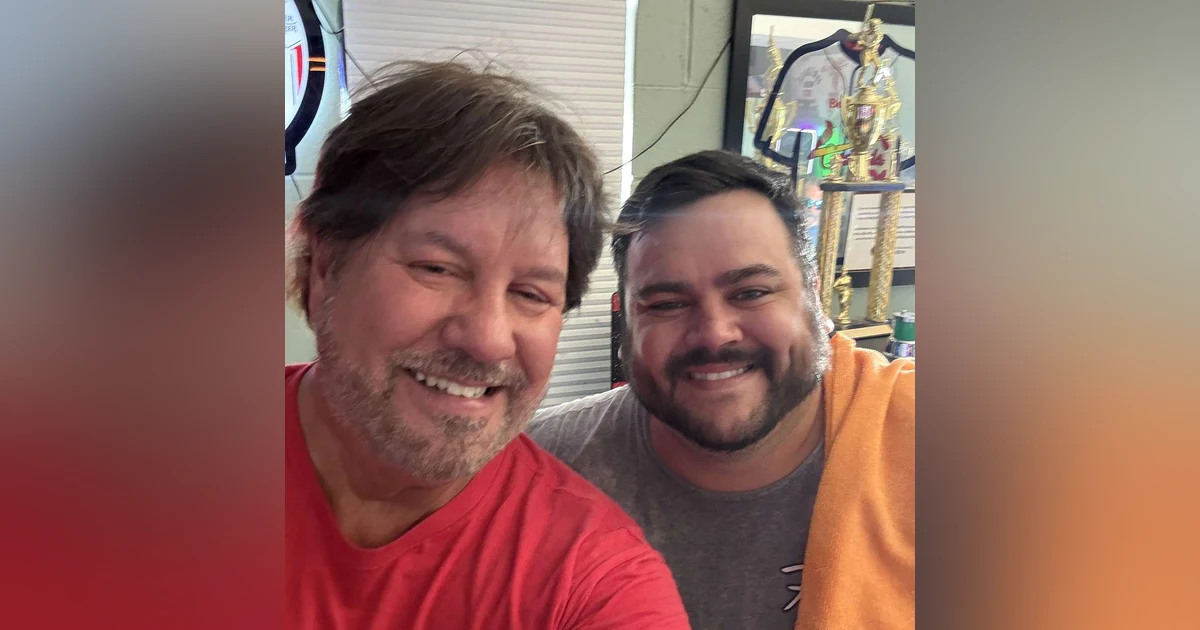
 The most powerful skill we can develop is in staying in control of our situation. Rather than react to others, let's be the boss of ourselves and act - not react. It may take a while for us to develop this skill but it makes all the difference over the course of our daily lives. To use an analogy, let's be the thermostat (in control) rather than the thermometer (the receiving end of it all). Makes senses so let's give it a whirl for a happier more positive life. Love all y'all. PS Yup that's my son Brendan (in the episode pic) who I love mucho and who is loved by all!
Hey there. How are you today, specifically? How are you? As I always say, I hope you're well. Let me know if I can ask you to please subscribe, like, and all that stuff. Yeah, I'm saying at the beginning of the podcast, but I've got a bunch of these out there, almost um 400, I think. So you know me by now if you're listening. And if you're a first timer, I appreciate that. So anyway, I come across this stuff, as you all know, as you know, and it I don't make these things up, but I find things on the interwebs, Instagram, TikTok, wherever, just in general, when I'm looking at stuff. And if I think it's relative to this podcast and to what you like to hear, I'll share it with you. And this is a case in point right here. There's this lady on she's a doctor, I apparently, on Instagram, Dr. Troy Lee, D-R-T-R-O-Y-L-E-E. And I came across this this morning, and it's very interesting that I did because I had a um incident last night, and this really applied to that incident. And I'll get to the point here. The the most powerful skill that we can develop is to be in a good mood. Right? And in saying so, uh this this wonderful person, she says, remember, you are the thermostat, not the thermometer. Right? We can control things, but we don't need to be we we shouldn't be controlled, and we shouldn't be reacting to what other people are saying and doing. And it can be pointed towards us, but we just have to sometimes just grin and bear it, you know, and we shouldn't be triggered by their issues, which will affect us the rest of our day. And I came home and I was I was unhappy, but I did not respond. And in doing so, let me tell you what happened. I went to a meeting last night, and um I was supposed to speak at it actually. I didn't get a chance because this uh gentleman that took over the whole meeting. I've done this, I do this, I'm this, I'm that, I'm the only person that's ever done this. Well, he he was wrong on several points, plus he came off as a really pompous, and I don't think people cared for that much. And I just sat there and I listened, and I knew several people in the room, and I had brought handouts. It was an issue on property taxes and in the county, and I'm on the county board. So rather than respond and challenge this gentleman, I just calmly at the end of the meeting, I said, There's probably 50 people there. I said, Hey y'all, I've got all the phone numbers for the people you can contact, all this information on this sheet. I've got flyers up at the desk as you leave. If you want them, you can have them. And I said, Thank you for being here, so-and-so, his name. And I said, We really appreciate it. And I walked out of there and I felt good because I didn't respond in front of 50 people. Would it have mattered if I'd have challenged this gentleman on things? Said, you know, but you said this, but you did this, and you're not the only one who's ever done this, but it just would have been petty, right? So I walked out of there in a good mood, and I was like, Yeah, it bothered me a little bit, but then I get up this morning and I see this on Instagram. You know, you can't control, we can't control ourselves. Self-regulation is so, so, so very important. And we sometimes we pause, you know, things you write an email and you put it aside, or you write a note to somebody, and rather than fire it off, you put it in the desk drawer. And the next morning, when you look at it, you're like, eh, it's not worth it. It's not worth it. And that's how I looked at this situation. It wasn't something that was worth worth getting into an argument with someone over. And I just sat and smiled, and you know, and people were looking at me, and a couple people said, Are you gonna get to talk tonight? And I said, It's okay. He's let him go, he's okay. And I just but I addressed them later. Um, one gentleman called me and I talked to him about what he wanted me to talk about, and somebody else had texted me, and I just made it known that, hey, you know what? I'm here for you if you need me. But I'm not gonna pontificate and act like I'm the big star in the room. And I felt good about that. So when you're in a situation like that, or just in general, don't be triggered by other people and their issues. And it we'll come out of character and look silly, and it's just not worth it, is it? It's just not worth it. Now, had that been a room full of 500 people, I probably would have picked a different strategy, but I still would have made my point without looking like a fool. And boy, when you look the fool, there's no there's no taking that back, is there? So let's again, let's learn to respond before let's learn to pause before we respond. And even in the one-on-one setting, if somebody says something and they challenge challenge us, let's think about that. Or or or let's ask them a question back and say, hey, you know, um, could you tell me a little bit more about what you're alluding to here? And it works because that makes that puts the ball back in their court, doesn't it? You know, I didn't always know this stuff, and I'm certainly no genius, but I do know that I'm not gonna let somebody ruin my day, and and I I just want to be there for others in in the best way possible, and that's by being in a good mood. So I'll leave I'll just go after that, but uh after this, but I gotta tell you, remember that you can we should be the thermostat, not the thermometer. We are the ones who can control things, not be controlled. It is so, so important. So, and it keeps you in a good mood, keeps us in a good mood, right? So that's pretty much all I got. I thought it was pretty pretty timely that this popped up on my Instagram feed after I hit a meeting last night, and I was like, you know what, Steve? Did a good job. You let other people be the fool, right? And I just smiled, smiled, smiled. And when people walked out of that meeting, what do you think? Every one of them grabbed one of my flyers, which has my name and number and just information. And I think that means more than anything, don't you? Anyway, SMF for the podcast. I love all y'all. We gotta keep it going, gotta keep in control of our lives. We are the thermostat, not the thermometer. Steve Reeves signing off, SMFarth podcast. Love you so much. And I gotta give kudos to Dr. Troy Lee on Instagram, D-R-T-R-O-Y-L-E-E. Cheers.